
Do you remember that point in 11th grade when your English teacher told your class enough already with quoting the dictionary to start every. single. paper! That’s a good principle to follow.

Oops. Do you forgive me for breaking the cardinal rule of grown-up writing? I hope so, because there really was no other way to start this post. This is the definition Google gave me of the word “evangelical.”
Throughout all my life, when I heard the word “evangelical” I associated it with the word “evangelize” and assumed that this adjective form of the verb must mean “something/someone that evangelizes.” Google seems to agree with me, but every other Christian community I’ve encounter doesn’t.
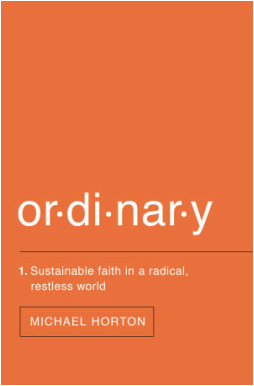 As far as I can deduct, the word “evangelical” in the Christian subculture of colleges, churches, and seminaries means “any type of Christianity that’s not exactly like the Christianity I associate with” For example, here’s a quote from the excellent book, Ordinary: “Whenever a new generation announces its radical and totally unprecedented culture shift, there is an evangelical movement that pressures churches to get on board if they wan to adapt and survive the next wave.” (Horton, 25).
I think “evangelical” has become the catch-all for Christians that are more liberal, more modern, more “relevant”, and more likely to sing Chris Tomlin songs. Yet all these are comparative statements. More liberal than what? What’s the baseline?
Can the evangelical Christian be defined with a certain set of denominations, the year their church was founded, the kind of music their worship includes, or even better, a uniting doctrine or lack thereof? For as much as I hear the word “evangelical” tossed around, I have yet to hear someone concretely set the parameters for who are evangelicals and who are not.**
This blog post is full of question marks because I still have no idea. I’m genuinely curious and inclined to continue to believe evangelical is the adjective form of to evangelize, unless I can be pointed to a robust and generally agreed upon definition. So, my dear readers, comment away! What do you think of when you hear “evangelical”?
As confused as ever,
Chloe
**Disclaimer: I realize that every professor, author, and preacher can’t spend 10 minutes defining all the words they use in their lectures, books, and sermons. However, since the word “evangelical” can both mean “according to the teaching of the gospel” and “Christian churches/movements we don’t agree with” I think it’s worth a footnote.
 the 2 and under households, this doesn’t mean buying all your fresh produce in bulk. Here are the staples that we’ve found save money and trips to the grocery store –>
 Chloe J Sayers